The Art of Arriving: From City Speed to Mountain Pace
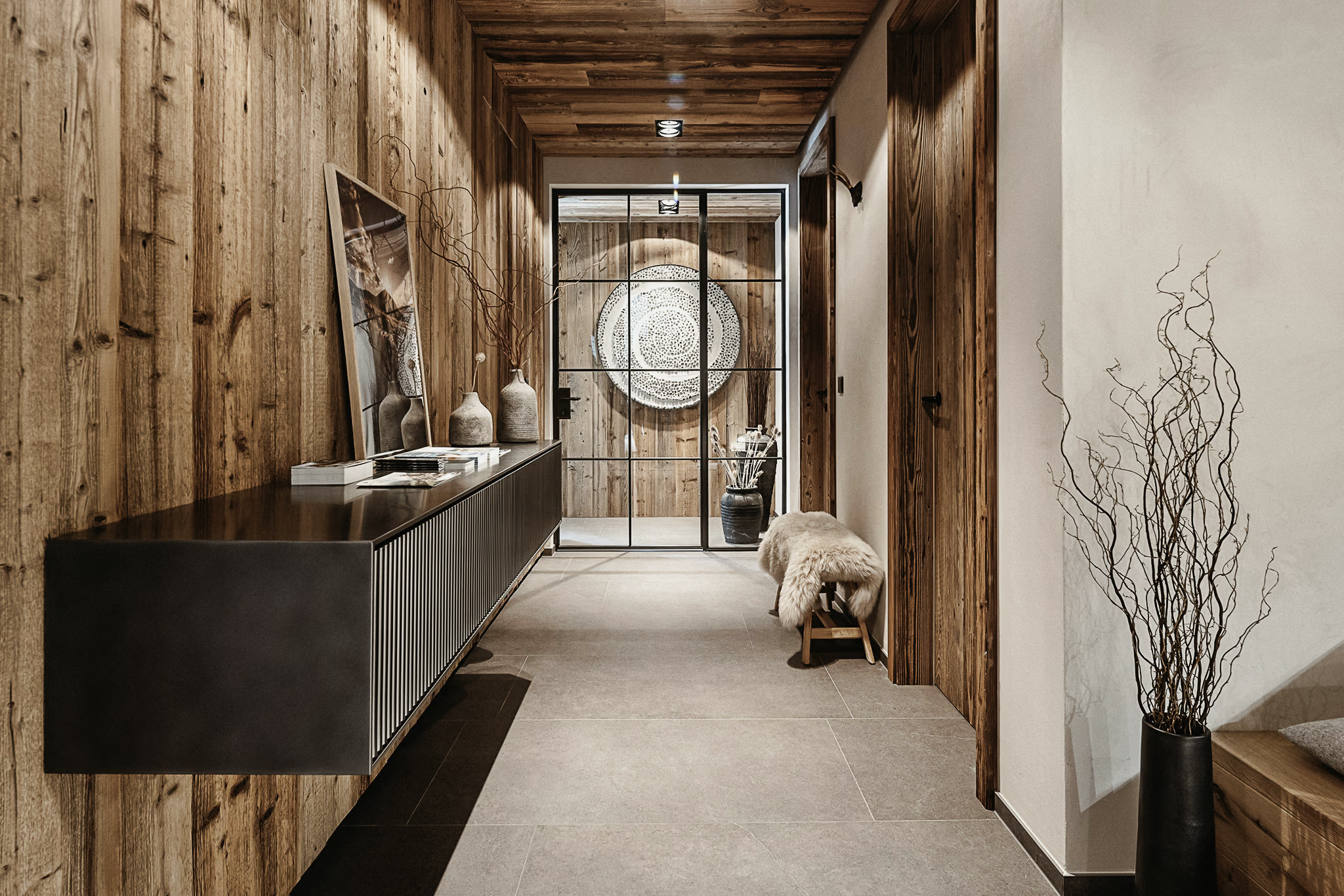
You arrive. Put down your bags. Hear the stream. The house is ready, but there is no reason to hurry into it.
The city arrives with you
You rarely notice how fast you have been living until the movement stops. Even after leaving traffic, meetings and crowded streets behind, the body may remain alert. The mind continues to organise. A phone is checked without reason. Dinner is discussed before the bedrooms have been seen. Tomorrow’s route is opened before today has properly ended.
This does not mean the holiday has failed to begin. It simply means that physical arrival and mental arrival happen at different speeds. The nervous system does not recognise a change of setting as quickly as the navigation system does. It needs signals that the pace has genuinely changed.
At 1,323 metres above sea level, in St. Oswald near Bad Kleinkirchheim, those signals begin to appear naturally. There is no through traffic beneath the windows, no hotel lobby to cross and no public programme already waiting. The road ends, the forest begins and the Oswalder Bach continues past the garden as it did before you arrived.
Let the house do the first work
The best retreats do not try to impress guests into relaxation. They create conditions in which calm can emerge without being forced. At CHALET FALK, the transition begins through material, proportion and light. Reclaimed timber brings warmth and texture. Lime plaster softens the walls. Linen, natural stone and wide wooden floors give the rooms a quiet physical presence.
The approximately eleven-metre-wide glass façade opens the lounge towards the meadow, stream and Nockberge Mountains. The view does not need to be searched for or reached after a walk. It is already there, changing with the light and weather while the interior remains still around it.
The architecture does not compete for your attention. It gives that attention somewhere to settle. You begin to notice the grain of the timber, the temperature of the floor, the sound of water outside and the way evening light moves through the room. These details do not create a dramatic transformation. They make a quieter one possible.
Sit down before you unpack
Most people arrive and immediately become efficient. Suitcases are opened, clothes distributed, chargers found and plans confirmed. It is understandable: organising creates the feeling of being in control. Yet the most valuable first step may be to do almost nothing.
Sit down before opening the suitcase. Make coffee, pour a drink or step onto the terrace before checking your phone. Look outside for a minute without deciding what the weather means for tomorrow. Let the view remain a view rather than turning it into information.
This small pause changes the meaning of arrival. The chalet stops being a place that needs to be managed and begins to become a place that can hold you. The unpacking will still happen. Dinner will still be decided. But the first act of the stay is no longer another task. It is attention.
Mountain pace is not inactivity
Slowing down is often confused with doing less. In reality, it changes the quality of what you do. Breakfast lasts longer because no table is needed by somebody else. A walk begins directly outside the door and ends whenever it feels complete. The sauna is used when the body wants warmth, not because a reserved time slot has arrived.
Mountain pace does not remove activity. Skiing, hiking, cycling, swimming and exploring Carinthia remain close. What changes is the need to turn every possibility into a plan. Experiences become available rather than compulsory, and a day at the chalet no longer feels like a day lost.
This freedom can initially feel unfamiliar. We are accustomed to measuring holidays by what was seen, reached or completed. Yet a slower stay is often remembered through smaller moments: coffee beside the glass façade, wet shoes drying near the entrance, the first fire of the evening or a late swim that was never written into the programme.
Privacy helps the body stop scanning
Shared spaces keep part of our attention active. Even in a beautiful hotel, we remain aware of other people: voices in the corridor, strangers at breakfast, somebody entering the sauna or waiting for a lounger beside the pool. These moments may be minor, but they prevent complete withdrawal.
At CHALET FALK, the entire house belongs to one travel party. The four suites, garden, terraces, lounge and Private Spa are not shared with external guests. The panoramic sauna, relaxation room and heated outdoor pool remain available whenever the moment feels right.
This privacy removes the need to scan the surroundings. You do not have to wonder who might enter next or whether you are staying too long. One person can read beside the fire while another goes to the sauna. A couple can remain in the pool after dark. A family can move through the house without adapting to hotel routines. The atmosphere becomes personal because nobody else is shaping it.
The first evening sets the rhythm
The transition becomes most noticeable as daylight begins to fade. Outside, the temperature falls and the forest darkens. Inside, the lighting can be dimmed throughout the house, allowing functional brightness to give way to warmer pools of light around the dining table, lounge and fireplace.
Dinner may be simple and prepared together in the open kitchen. A Private Chef may take over for the evening. Or perhaps there is only bread, cheese, wine and the realisation that nobody feels like leaving again. The point is not what has been arranged, but that the evening can remain open.
Later, the sauna is warm and the pool still holds its 33°C temperature beneath the night sky. There is no final spa entry, no closing time and no need to return through a public building afterwards. You leave the water when you are ready, sit beside the fire and allow the day to end without another transition.
Sound changes as attention returns
The mountains are not silent. The stream is present, timber shifts as temperatures change and wind moves through the larch trees. Rain alters the sound of the glass and roof. In winter, snow absorbs the sharper edges of the landscape.
These sounds differ from the signals of the city because they rarely require a response. There is no engine approaching, no conversation to interpret and no alert asking to be opened. The soundscape remains alive without insisting on attention.
At CHALET FALK, you may choose to add your own soundtrack through the Sonos system in the lounge, spa and sauna. Or you may leave the house entirely to water, fire and the mountains. Both choices belong to the same freedom: deciding what should fill the room and when nothing else is needed.
The morning after arrival
True arrival often reveals itself the following morning. The body wakes before the schedule does. Daylight enters the room, the stream continues outside and breakfast arrives at the door rather than ending at a fixed hour.
There is no need to join a public breakfast room or become presentable for other guests. Coffee can be taken back to bed, carried to the terrace or left to cool beside the window. The first decision of the day does not need to be made immediately.
Some mornings lead straight into the mountains. Others begin with the pool, the sauna or another hour beneath the duvet. By then, the chalet is no longer somewhere you have just reached. It has begun to feel like the place from which the day can unfold.
Arriving means allowing the place to change you
A retreat is not successful because it instantly transforms the people who enter it. The deeper change is usually quieter. Shoulders lower. Conversations become less efficient. The phone remains in another room. The need to know what happens next gradually weakens.
The mountains create the distance, but the transition still needs permission. Permission not to optimise the first afternoon, not to unpack immediately and not to begin the holiday by organising it. Permission to let the house, the landscape and the slower rhythm do part of the work.
Arriving is not about becoming productive in a more beautiful location. It is about allowing the location to change the way you move through time — slowly, gently and, for a while, completely.