Embracing Serenity in the Alps
A Landscape Beyond Higher, Faster, Further
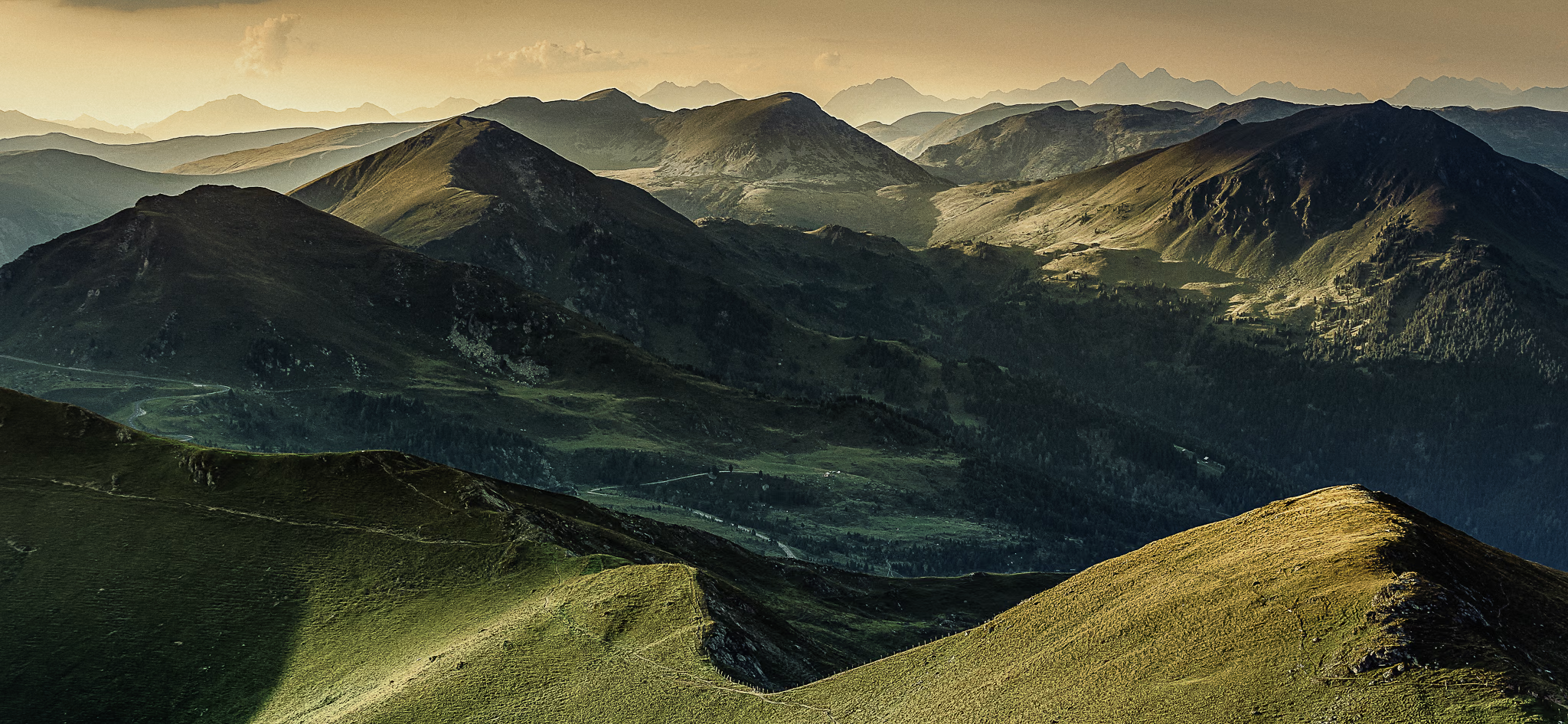
The Nockberge do not follow the usual alpine clichés. Their contours are soft, their slopes open and their horizons wide. Yet this is still a high-alpine world: raw in places, unpredictable and entirely its own. Between ancient stone pines, larch forests and quiet heights lies a landscape that has preserved much of what once defined it.
A large part of this world forms part of a biosphere reserve: a protected landscape and living environment shaped by the idea that nature and people do not exist separately, but as part of one shared system. That relationship remains tangible here.
This is not a place defined by higher, faster, further. Not every encounter with nature has been engineered. Not every summit has become a programme. The landscape can be spectacular without ever needing to be staged. Much of it remains immediate, unpolished and close to what it has always been.
Chalet Falk lies in the middle of this world. Surrounded by forest, alpine meadows and the clear waters of the Oswalder Bach, with the biosphere reserve beginning just beyond the door.
The rounded summits and broad slopes of the Nockberge appear gentle from afar. Spend time among them, however, and another side reveals itself. Narrow paths lead through light-filled larch forests and across open heights. Above the tree line, the landscape becomes more austere, the wind cooler and the horizon wider.
On some summer afternoons, a storm moves across the mountains. The air shifts, the sky darkens and heavy rain falls across forest and meadows. A short while later, everything is quiet again. What remains is clear air and the scent of stone pine, larch and spruce, mixed with the freshness of dew on the alpine meadows.
A Living World We Share
In St. Oswald, nature does not end at the edge of the village. It runs through the entire place, through meadows, forests and gardens. Early in the morning, at dusk or after dark, deer are often seen standing quietly beside the road. A fox crosses the path. Hares sit in the grass. In autumn, the calls of red deer carry from the forest.
People and wildlife still share a habitat here that has not been completely organised, controlled or staged. That is one of the defining qualities of the Nockberge and one of the central ideas behind the biosphere reserve. Nature is not simply a backdrop. It remains a living world of its own.
Perhaps that is why time begins to feel different here so quickly. Less driven. More closely connected to weather, light and the seasons. The rhythm of the day follows less of a schedule and more of what is actually there: a clear morning, mist between the trees, a summer storm moving over the summits and, afterwards, the scent of stone pine, larch and spruce rising from wet forest and meadows.
Nature here does not feel like part of the tourist offering. It is simply there.
The Feeling of Another Time
There are places where time begins to lose its usual importance.
A quiet path early in the morning. A bench beside an old alpine hut. A narrow trail where no one passes for hours.
In the Nockberge, it is still possible to rediscover something that has become rare: the feeling of being on your way without constantly needing to arrive somewhere. Following the landscape instead of an itinerary. Letting weather, light and mood shape the day.
Perhaps it is precisely this lack of urgency that stays with you. The Nockberge do not constantly try to reinvent themselves. Much is still here because it never had to disappear. Old barns. Traditional mountain huts. Ancient, weathered trees.
The biosphere reserve protects more than an exceptional landscape. It preserves the idea that nature, agriculture, villages and the people who live here can remain part of one shared environment.
A Retreat and a Starting Point
Chalet Falk is part of this landscape and, at the same time, a deliberate counterpoint to its rawness.
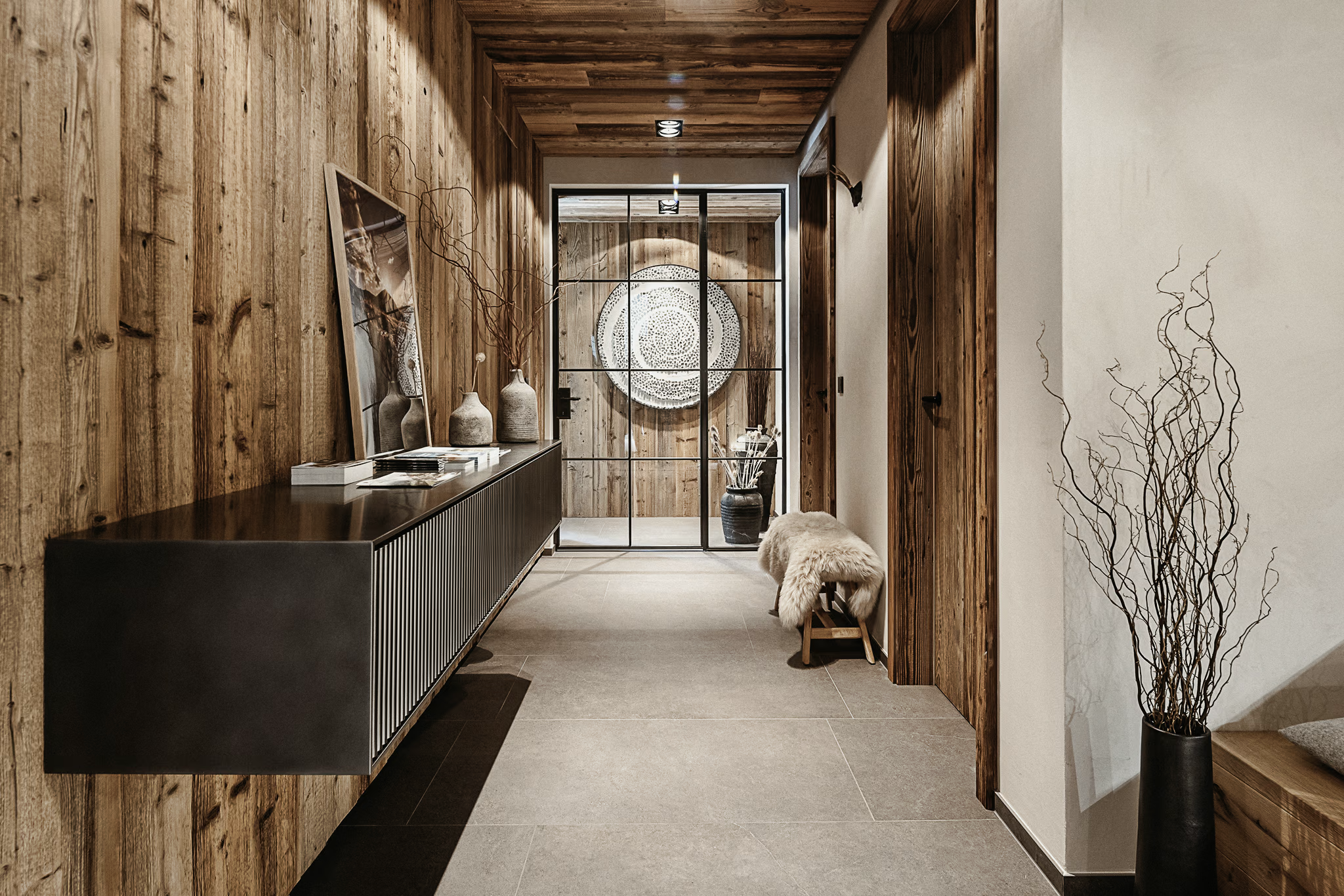
Clear architecture meets aged wood, natural stone and quiet materials. Large glass surfaces open the house towards the landscape. The sound of the stream remains present. Forest and meadows begin just beyond the house.
The chalet is more than a place to return to at the end of the day. It is both retreat and starting point.
Mornings begin with coffee on the terrace or a few lengths in the warm pool. Later, paths lead out into the Nockberge and deeper into the biosphere reserve. On foot, by bike, towards alpine pastures or further into the higher landscapes.
After hours spent in the mountains or by one of Carinthia’s lakes, the warmth of the sauna and pool awaits. In the evening, the light becomes softer, the fire begins to crackle and the Oswalder Bach continues to run in the background.
And suddenly, what comes next no longer seems important.
A Different Kind of Space. And Silence.
The particular quality of the Nockberge lies in the way grandeur and quiet can exist side by side.
In the openness of the high plateaus. In the clarity of the air after a storm. In the scent of the forests. In the movement of light and shadow across summits, treetops and alpine meadows. And in the feeling of being much further removed from everyday life than the actual distance would suggest.
Perhaps it is this connection that makes Chalet Falk and the Nockberge so special: an extraordinary private retreat in the heart of the biosphere reserve, surrounded by a landscape that has nothing to prove and nothing to add for effect.
Gentle and high-alpine at once. Distinctive, unspoilt and quiet.